Not wood packaging material
Plastic Euro pallets
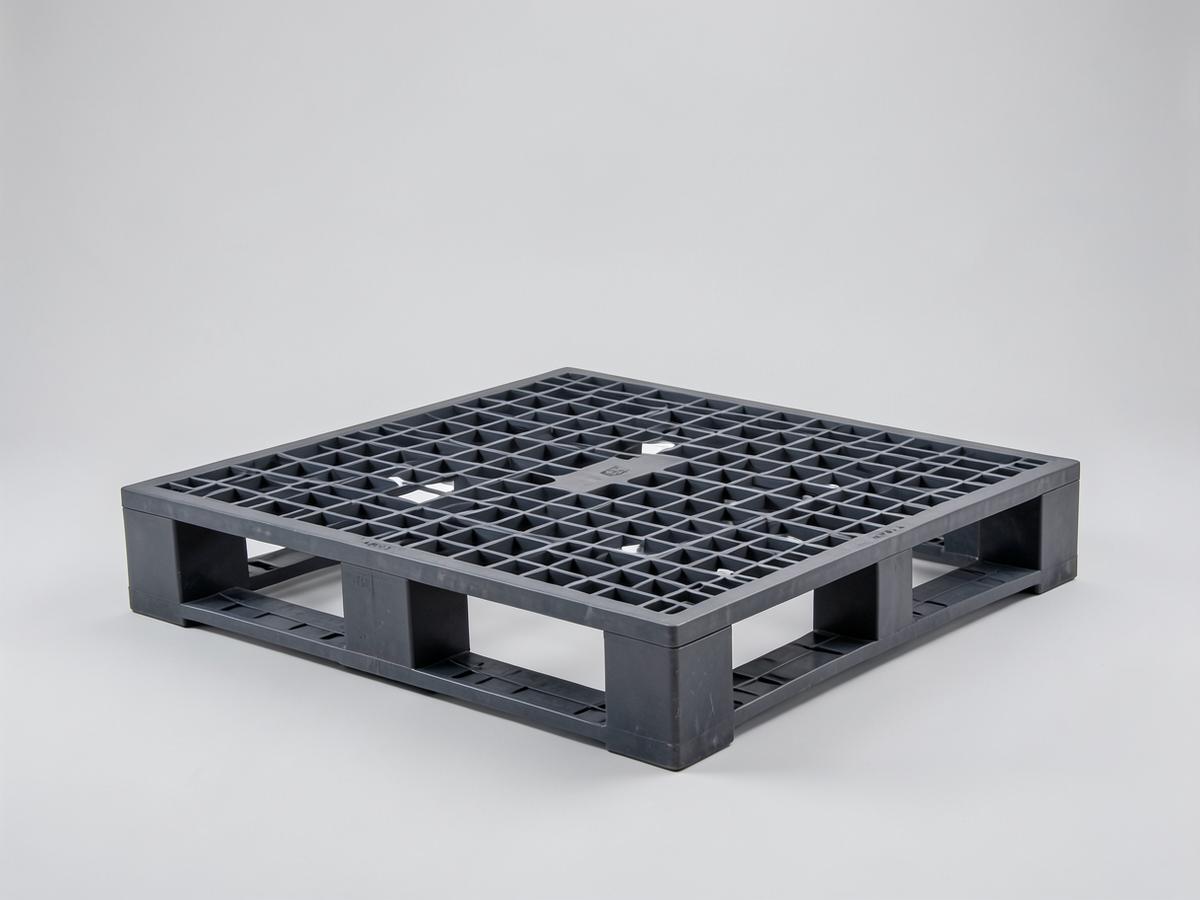
The 1200 x 800 footprint in moulded plastic. Washable, dimensionally consistent, and — because it is not solid wood — outside the scope of ISPM 15 entirely. That last point is why a great many exporters ask about them.
Why people move to plastic
Three reasons come up again and again: hygiene, consistency and paperwork. Plastic can be washed and returned to service, it does not splinter or shed fibre, and its dimensions stay put — which matters if pallets are running through automated handling, conveyors or shuttle racking where a swollen board causes a stoppage.
The plant-health point is the one most often misunderstood, so to be precise: ISPM 15 applies to solid wood packaging material. Plastic pallets are not wood packaging material, so they do not require ISPM 15 treatment or an IPPC mark. That removes a category of border risk. It does not remove customs obligations, product requirements, or any other rule that applies to your consignment, and it is not a reason to stop reading the movement guidance.
Where they earn their cost
- Closed loops. Fixed circuits between known sites, where the pallet reliably comes back and the higher unit cost amortises over many trips.
- Hygiene-sensitive work. Food handling, pharmaceutical, cleanroom-adjacent and personal care environments where washdown is part of the process.
- Automation. AS/RS, conveyors and robotic handling that depend on tight, repeatable dimensions and clean undersides.
- Repeat export lanes. Where designing timber treatment out of the process is worth more than the pallet costs.
Where they are the wrong answer
- One-way despatch to a customer who will not return the pallet. You are gifting an expensive asset.
- Sites that repair their own pallets — a cracked moulding is generally not repairable in the way a broken deck board is.
- Work requiring EPAL exchange. Plastic Euro pallets carry no EPAL marks and sit outside the pool; see EPAL or Euro-format?
Variants, and what we confirm
Plastic Euro pallets vary enormously: nine-leg, three-runner and full-perimeter base designs; open or closed decks; with or without steel reinforcement; nestable, stackable or rackable. Each behaves differently in racking and under load. We will not publish a rackable load rating here, because the honest figure depends on the specific moulding, the support conditions and your goods. Tell us the racking type, the load and whether the pallets are returning, and the quotation confirms the model actually offered.
If you are weighing the two materials against each other, read wooden or plastic Euro pallets first — it sets out the trade-offs without pretending one always wins.
Outside ISPM 15 scope
ISPM 15 covers solid wood packaging. Plastic pallets are not within it, so no heat treatment or IPPC mark applies. Other rules for your consignment still do.
No load rating published
Static, dynamic and racking capacities differ by moulding and by support conditions. We confirm figures for the specific model offered, on the quotation.